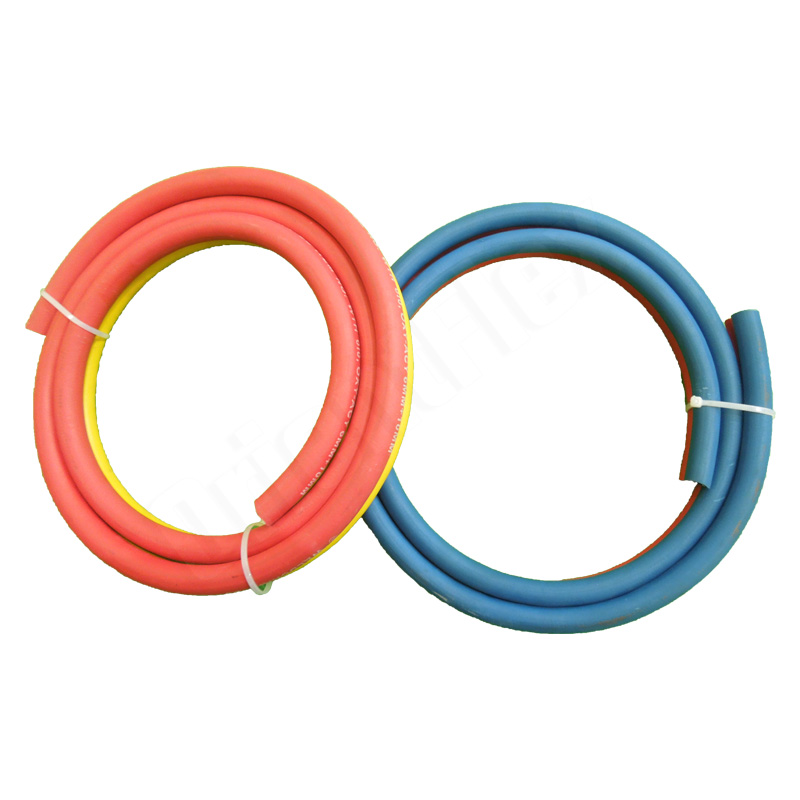
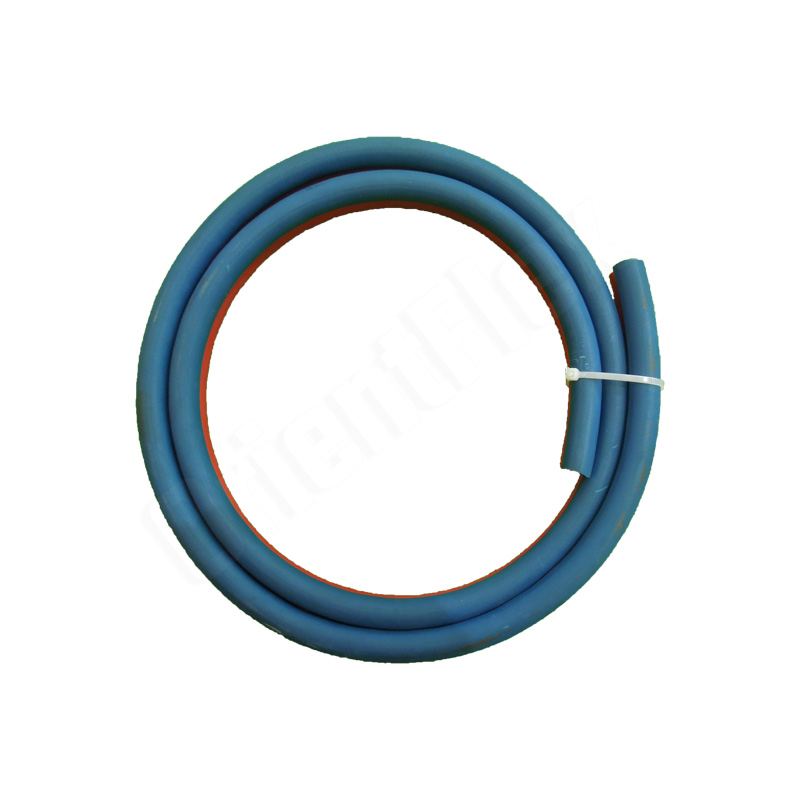
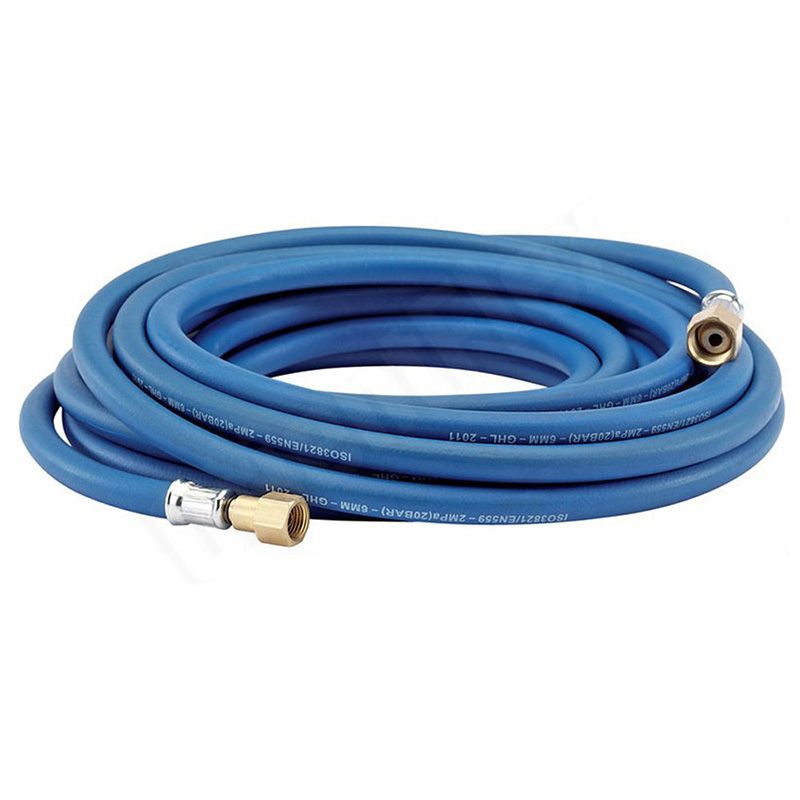
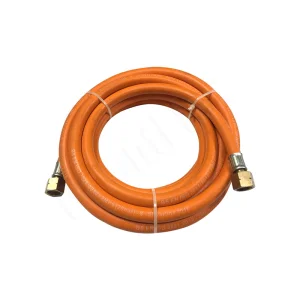
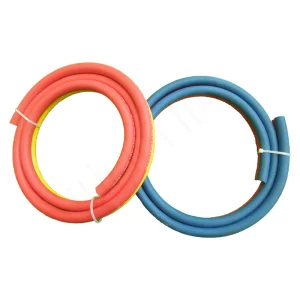
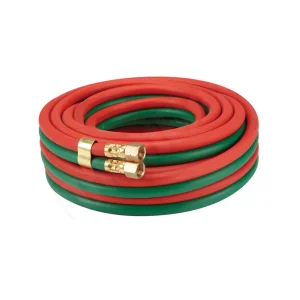
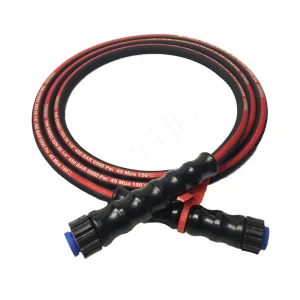
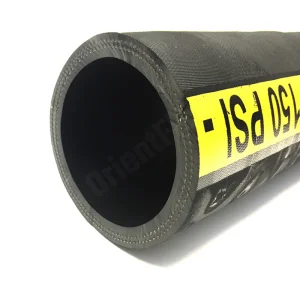
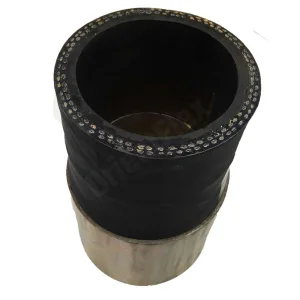
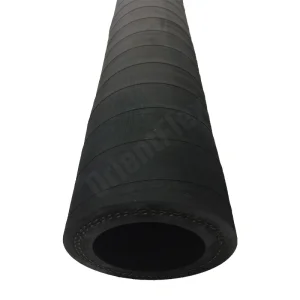
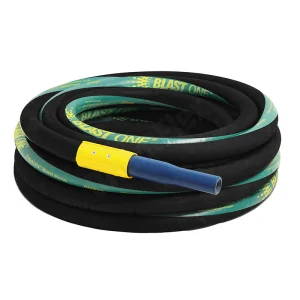
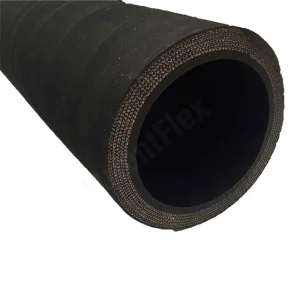
This hose is specially designed for welding and cutting, primarily serving the purpose of supplying oxygen. It is commonly used in industrial sectors such as welding equipment, ship building, and steel factories.
In welding operations, the oxygen hose is dedicated strictly to oxygen supply. Its oil-resistant and flame-retardant cover protects the hose from burn damage and splatter. Furthermore, the hose prevents the blooming effect, ensuring that flammable wax or plasticizers do not migrate to the surface. The synthetic construction offers great flexibility, and the cover provides excellent resistance to the large volumes of ozone released during welding, making it a critical component for welding and cutting equipment.
In welding work, inflammable and explosive materials often coexist with open flames, creating constant safety risks. Operators must adhere to strict safety regulations.
Oxygen Bottle Safety
- Check the oxygen bottle regularly, at least every 3 years, and ensure identification marks are clear.
- Always set up the oxygen bottle upright on a shelf to prevent accidents caused by falling.
- Never use a bottle that lacks a pressure reducer.
- Use specific tools to open the bottle slowly and always verify that the pressure meter pointer is in the normal range.
Oxygen Hose Handling Safety
- Keep the oxygen hose away from inflammable materials and open flames.
- Do not twine the hose around other substances.
- Never cut or step on the hose with heavy materials.
- Keep the hose away from sharp objects to prevent damage.
Frequently Asked Questions (FAQ)
Q1: Can this oxygen hose be used for other gases?
No, this hose is specially designed for welding and cutting, and it should only serve to supply oxygen.
Q2: Why is the cover of the hose flame retardant?
The flame-retardant cover is essential to protect the hose from burn damage and splatter during high-heat welding operations.
Q3: How often should the oxygen bottle be inspected?
You must check the oxygen bottle regularly, and the check term should be within 3 years.
Q4: Is it safe to leave the oxygen hose near open fire?
No, you must keep the oxygen hose away from inflammable materials and open fire to avoid safety risks.
Q5: What should be done if the hose is damaged or cut?
The hose should never be cut or stepped on. If damaged, it should be replaced immediately to ensure operational safety.
 Orient Flex