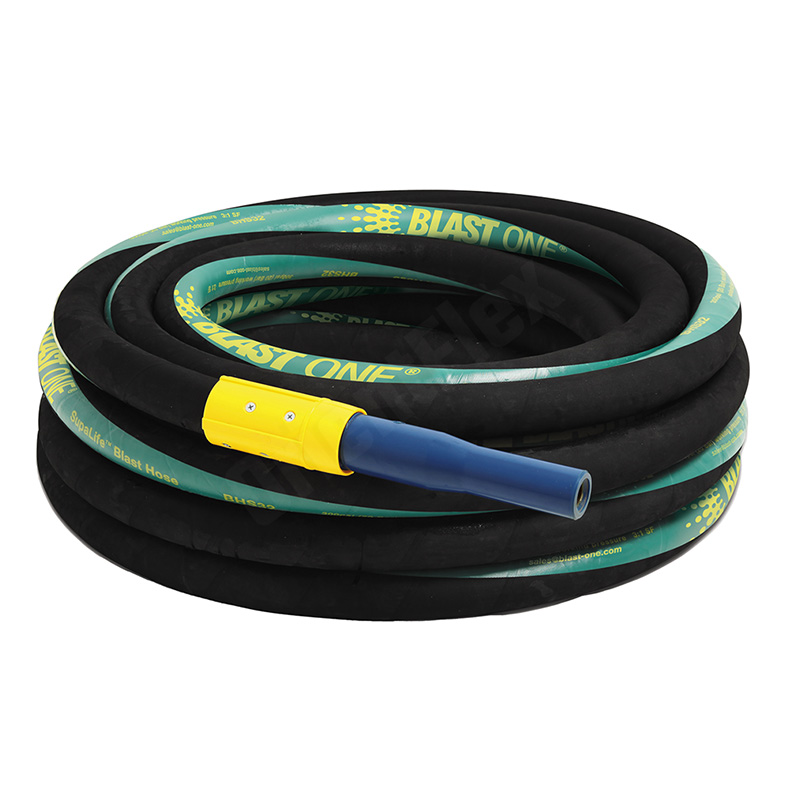
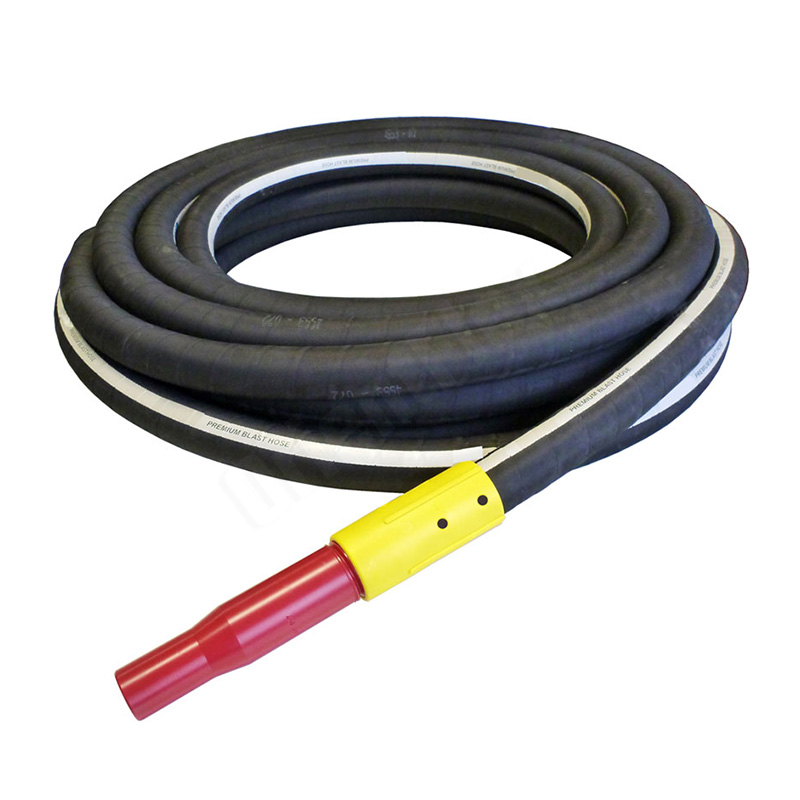
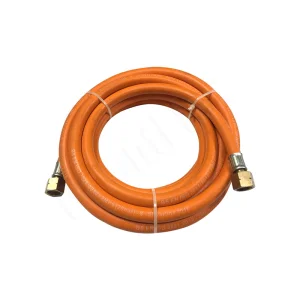
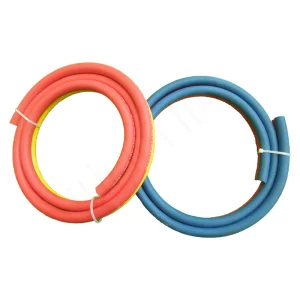
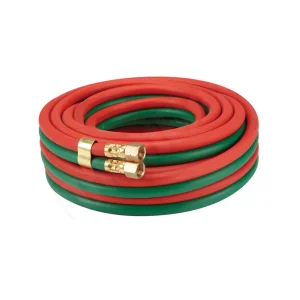
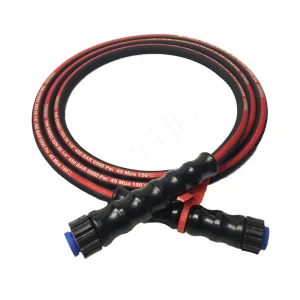
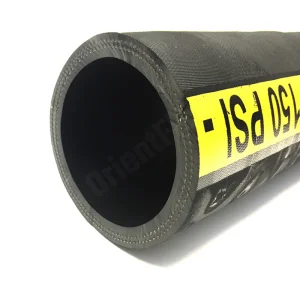
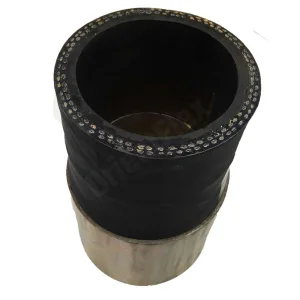
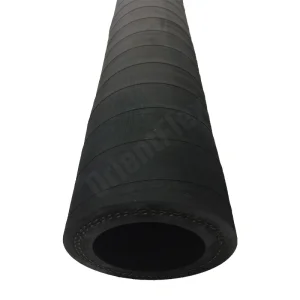
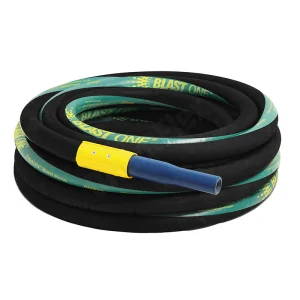
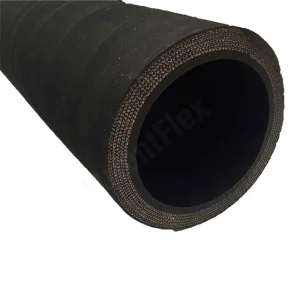
It’s used to remove the rust on the metal surface. Besides, it’s suitable for dry sandblast and wet sandblast work. In addition, it’s ideal for grit, slurry, concrete and particle transfer. While it widely serves in tunnel, metallurgy, mine, dock and municipal. The sandblast machine, shot blasting machine and grain blower need a sandblast hose.
Key Features & Performance
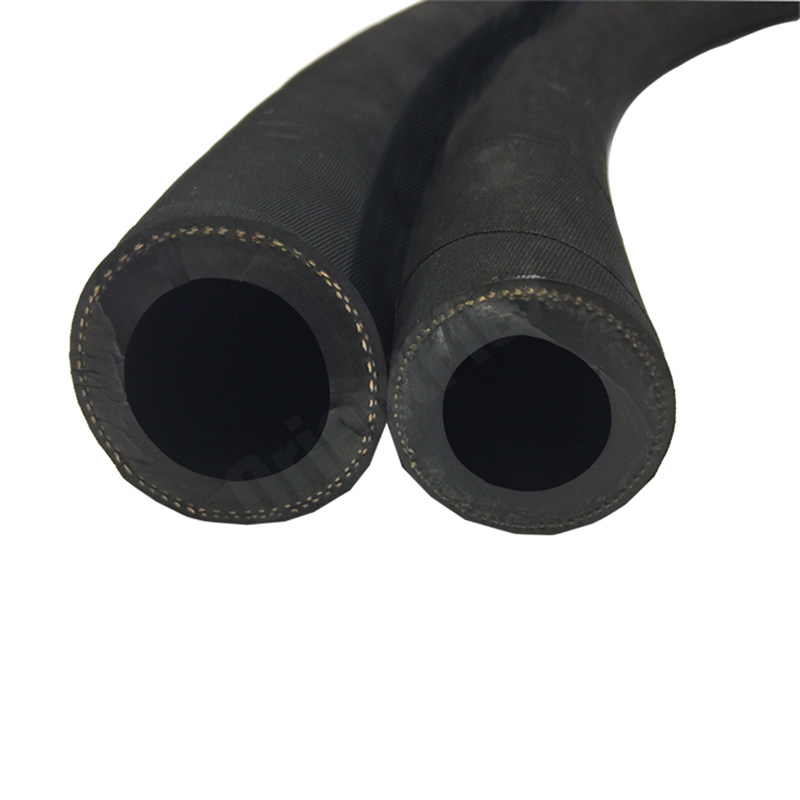
Because of NR and special reinforce agent, sandblast hose has excellent abrasion resistance. Besides, it is very flexible. Although the hose is really thick.
While quality and high tensile yarn reinforce provide higher pressure. Meanwhile, the hose will not twist. As for the cover, NR rubber is wear-proof and impact-proof.
Sandblasting Methods Comparison
In fact, sandblast work are mainly dry and wet.
- Wet Blast: Mixes the abrasive and water into slurry. It’s to prevent the metal rust. But there should be inhibitor inside the water.
- Dry Blast: It is high-effective. The surface is rough with large amount of dust.
Quality Standards & Wear Resistance
As the most important factor, wear resistance determines the quality of sandblast hose.
ISO 4649 Standard
Requires the abrasion volume should be less than 140mm³.
DIN 53561 Standard
Requires the abrasion volume should be less than 60mm³.
Safety Operation Guidelines
Notice: Sandblast is a dangerous work. Thus you should focus on these factors:
- Before the sandblast work, you must wear the protective suit. Besides, there should be at least 2 person on the site.
- 5 minutes before the work, start the dust removal machine. While if the machine fail, you can’t do the sandblast work.
- During the blast machine work, other people can’t approach.
- After the work, the dust removal machine should work 5 minutes longer. Because this can remove the dust in the workshop and keep it clean.
- Once accident happened, stop the work immediately.
Frequently Asked Questions
Q: What are the primary applications of a sandblast hose?
Sandblast hoses are used for removing rust on metal surfaces, grit, slurry, concrete, and particle transfer. They are essential in tunnels, metallurgy, mines, docks, and municipal projects.
Q: What makes the hose highly abrasion-resistant?
The use of NR (Natural Rubber) combined with special reinforcing agents ensures excellent abrasion resistance while maintaining flexibility.
Q: What is the difference between wet and dry sandblasting?
Wet blasting uses a mixture of abrasive and water (slurry) to prevent rust, whereas dry blasting is highly effective but generates a large amount of dust and results in a rougher surface.
Q: What industrial standards measure the quality of sandblast hoses?
The quality is determined by wear resistance. ISO 4649 requires abrasion volume less than 140mm³, while the stricter DIN 53561 requires less than 60mm³.
Q: What safety measures are required before starting work?
Operators must wear protective suits, ensure at least two people are on-site, and run the dust removal machine for 5 minutes prior to starting.
Q: Why should the dust removal machine run after the work is finished?
It should run for an additional 5 minutes to effectively remove remaining dust in the workshop and maintain a clean environment.
 Orient Flex